4 Weather Insulation
Radon gas testing mitigation abatement
Not verified yet.
Phone: not listed yet
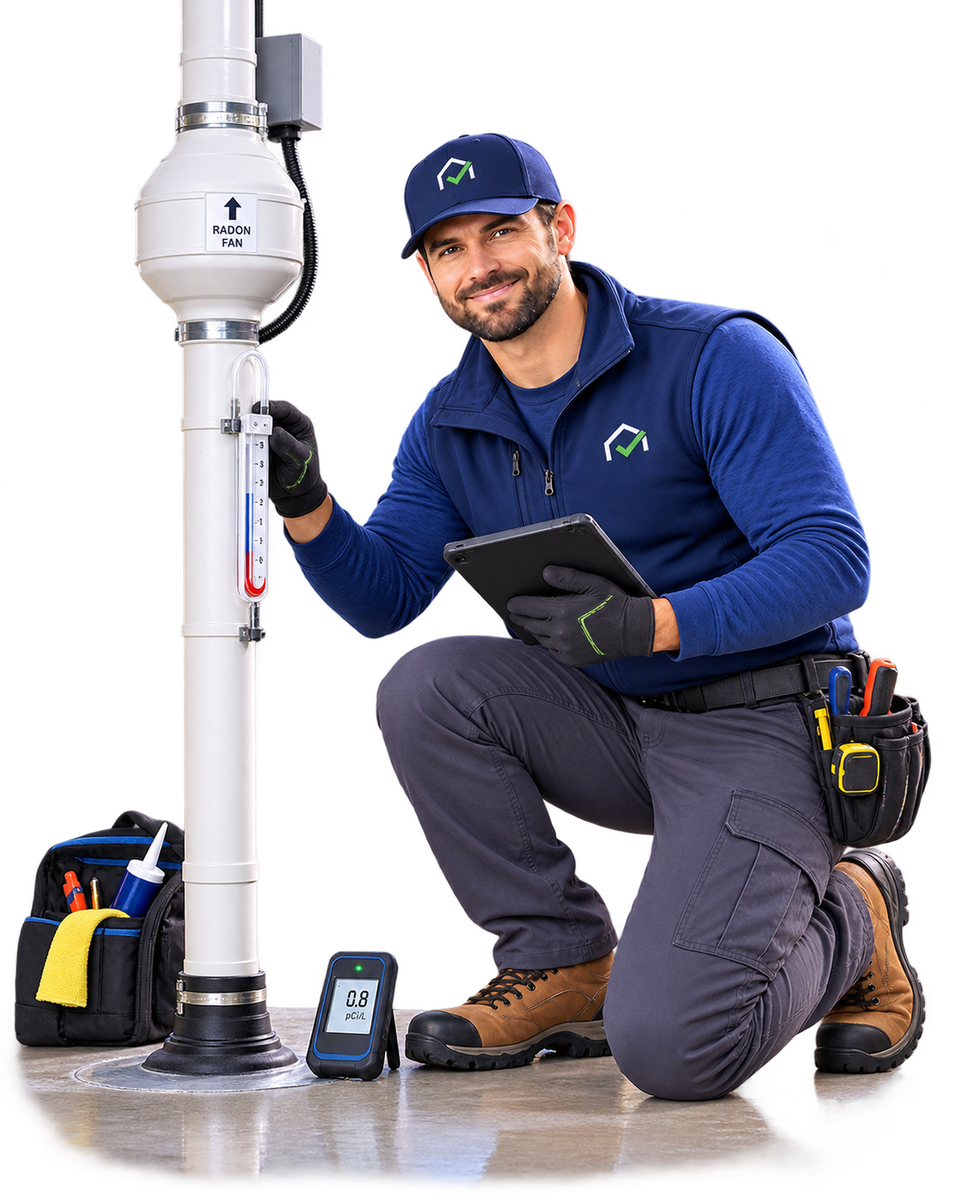
Radon is a radioactive gas you can't see, smell or taste, produced by uranium breaking down in prairie soil — and it's the leading cause of lung cancer in non-smokers in Canada. The Prairies have some of the highest documented residential radon levels in the world: studies (including the University of Calgary's Evict Radon program) have found that roughly one in six Alberta homes — and by some recent surveys as many as one in four — exceed Health Canada's guideline of 200 Bq/m³. New homes aren't exempt; some of the highest readings come from newer builds. The good news is that radon is one of the most fixable home-health problems there is. A long-term test (about $35–$60 for a mail-in kit, or $150–$400 professionally) tells you your number; if it's high, a mitigation system — typically $2,000–$3,500 installed in Calgary — reduces levels dramatically, usually within a day's work. The catch is competence: radon work is certified, not just licensed. C-NRPP (the Canadian National Radon Proficiency Program) is the national standard, and for this category we verify it on every badged company — alongside our usual licence, insurance and WCB checks. If someone offers to "fix your radon" without a C-NRPP number, keep looking.
TrueTrades has listed 17 radon testing and mitigation companies as verification pending while official checks are completed. Ranking is alphabetical and is never sold.
Radon gas testing mitigation abatement
Not verified yet.
Phone: not listed yet
Radon testing and mitigation / indoor air quality
Not verified yet.
Phone: not listed yet
Radon mitigation by C-NRPP certified radon professionals claimed
Not verified yet.
Phone: not listed yet
Radon testing and mitigation; free tests/estimates; warranty claim
Not verified yet.
Phone: not listed yet
C-NRPP certified radon mitigation claimed; based in Airdrie
Not verified yet.
Phone: not listed yet
Radon testing mitigation/removal C-NRPP certified claimed
Not verified yet.
Phone: not listed yet
Certified/licensed/insured radon testing and mitigation claimed
Not verified yet.
Phone: not listed yet
Radon testing and mitigation/remediation
Not verified yet.
Phone: not listed yet
Radon testing and mitigation
Not verified yet.
Phone: not listed yet
Residential radon mitigation C-NRPP certified claimed
Not verified yet.
Phone: not listed yet
Radon testing and mitigation
Not verified yet.
Phone: not listed yet
Testing/mitigation; building scientists C-NRPP certified claimed
Not verified yet.
Phone: not listed yet
Radon testing/mitigation; premium mitigation solutions
Not verified yet.
Phone: not listed yet
Radon testing and C-NRPP certified mitigation claimed
Not verified yet.
Radon mitigation C-NRPP certified claimed; 10-year warranty claim
Not verified yet.
Phone: not listed yet
C-NRPP certified testing and mitigation claimed
Not verified yet.
Phone: not listed yet
Radon testing/mitigation C-NRPP certified claimed
Not verified yet.
Phone: not listed yet
TrueTrades does not publish fictional, scraped or pay-to-rank listings. If you are a Calgary company in this category, you can claim or verify your listing for free.
Yes — always test first. Radon varies house to house, even between neighbours. A three-month test during heating season (fall–spring) is the gold standard. Some companies on this page offer C-NRPP-certified measurement if you'd rather not DIY the kit.
Health Canada recommends remediating within two years at 200–600 Bq/m³, and within one year above 600. It's a chronic-exposure risk, not an acute one — no panic required, but it shouldn't sit on the someday list, especially with kids or a basement bedroom.
The standard fix is active sub-slab depressurization: a sealed pipe through the basement slab connected to a quiet fan that vents soil gas outside before it enters your home. Most Calgary installs are done in a day and cut levels by 80–90%+. Your installer should retest after installation to prove the result.
Increasingly, yes. Radon testing is appearing in more Alberta real-estate transactions, and a documented sub-200 reading with a professionally installed system is becoming a selling point — while an unaddressed high reading discovered by a buyer's inspector is a negotiation problem.
Yes. Post-2010 builds have shown some of the higher readings in Alberta studies — modern airtightness can concentrate soil gas. Alberta's building code now requires a radon rough-in pipe in new homes, which makes mitigation cheaper, but the rough-in alone is not a system.